
C60 and Autoimmune Research
What 17 years of lab studies show about oxidative stress, inflammation and immune balance.
Autoimmune conditions are among the most searched health topics online, and people want to know one thing: what drives the immune system to overreact? A growing body of research points to oxidative stress as a major player. That is why universities and medical schools have spent years testing C60 in immune, joint, gut and nervous system research.
This is a straight look at that research. What was tested, what form of C60 was used, what the researchers found, and what it does and does not mean for you.
01
Oxidative Stress and the Immune System
Your immune cells use reactive oxygen species, often called free radicals, as signals. In the right amounts they help the body respond to threats. When they build up faster than the body can clear them, that is oxidative stress, and the immune response can stay switched on longer than it should.
When free radicals outpace the body's antioxidant defenses, immune signaling can stay turned up.
Researchers have tied oxidative stress to key inflammatory pathways, including TNF alpha and NF kappa B signaling, which sit at the center of autoimmune research. Reactive oxygen species also signal the formation of osteoclasts, the cells that break down bone in inflamed joints.
C60 is known in the scientific literature as a "radical sponge" because one C60 molecule can take on many free radicals without breaking apart. That property is the starting point for nearly every study below.
02
Four Areas of Autoimmune Research
03
Mast Cells, Histamine and Immune Overreaction
Ryan et al., Journal of Immunology, 2007
Researchers at Virginia Commonwealth University tested water soluble C60 molecules on human mast cells and basophils, the immune cells that release histamine and other inflammatory compounds.
Mast cells are not just allergy cells. Researchers now see them as a link between the immune system and inflamed tissue, including joints. That led straight to the joint research.
04
Joint Research: Synovium, Cartilage and Bone
The synovium, the lining around a joint, can become a hotspot of immune activity, oxidative stress and tissue breakdown. More C60 research has focused here than anywhere else.
Yudoh et al., International Journal of Nanomedicine, 2009
Researchers at St. Marianna University School of Medicine in Japan exposed human synovial cells, lymphocytes and macrophages to TNF alpha, a major inflammatory signal.
Yudoh et al., International Journal of Nanomedicine, 2009 (second paper)
The same team looked at osteoclasts, the cells responsible for bone loss in inflamed joints.
Fiziolohichnyi Zhurnal (Physiological Journal), 2013
Most early joint studies used modified C60. This one tested plain, pristine C60 in the same rat model.
Dellinger et al., PLoS One, 2015
A team including Harvard affiliated researchers tested a panel of C60 compounds on human mast cells, synovial cells and osteoclasts, then took the best performers into two mouse models of inflammatory arthritis.
05
Gut Lining Research
The gut holds most of the body's immune tissue, and gut inflammation is one of the fastest growing areas of autoimmune research.
Lazcano Silveira et al., Journal of Inflammation Research, 2022
This one stands out. Researchers used C60 dissolved in grapeseed oil, given by mouth at 3 mg per kg per day, in a rat model of colitis.
Byelinska et al., Materials Science and Engineering C, 2018
A Ukrainian and German research team studied pristine C60 in a rat model of colitis, measuring colon tissue damage and blood markers of inflammation.
Read the study →
06
Nervous System Research
Basso et al., Journal of Clinical Investigation, 2008
Harvard Medical School researchers built a compound called ABS 75: a C60 core attached to a molecule that blocks a specific nerve receptor. They tested it in a mouse model used to study progressive multiple sclerosis.
07
What the Research Says About Safety
Gharbi et al., Nano Letters, 2005
Researchers in France gave pristine C60 to rats, then exposed them to a chemical that causes severe free radical damage to the liver.
08
The Research Timeline
Nine studies across 17 years, color coded by research area.
09
Pristine C60 vs. Modified C60
Some of these studies used C60 that was chemically modified to dissolve in water. Others used pristine C60, the plain molecule found in supplements.
| Study | Form | Area |
|---|---|---|
| Gharbi 2005 | Pristine | Antioxidant activity, safety |
| Ryan 2007 | Modified | Mast cells, histamine |
| Basso 2008 | Modified | Nerve tissue |
| Yudoh 2009 (x2) | Water soluble | Synovium, bone |
| Physiological Journal 2013 | Pristine | Joint inflammation |
| Dellinger 2015 | Modified | Joint inflammation |
| Byelinska 2018 | Pristine | Gut lining |
| Lazcano Silveira 2022 | Pristine, oral | Gut lining |
The pristine C60 results matter most for anyone taking a C60 supplement, and they fit the bigger pattern: strong antioxidant activity across very different tissues.
10
What This Means and What It Doesn't
What it means
- C60 is a serious subject of immune and inflammation research at universities and medical schools.
- The common thread is oxidative stress, something the body deals with every day.
- Pristine C60, the supplement form, has shown results in its own right.
What it doesn't mean
- C60 does not treat, cure or prevent any autoimmune condition.
- These are cell and animal studies. No human trials have tested C60 for any disease.
- Do not change or stop any medication. Talk with your doctor first.
11
Why People Choose Greska's Carbon 60
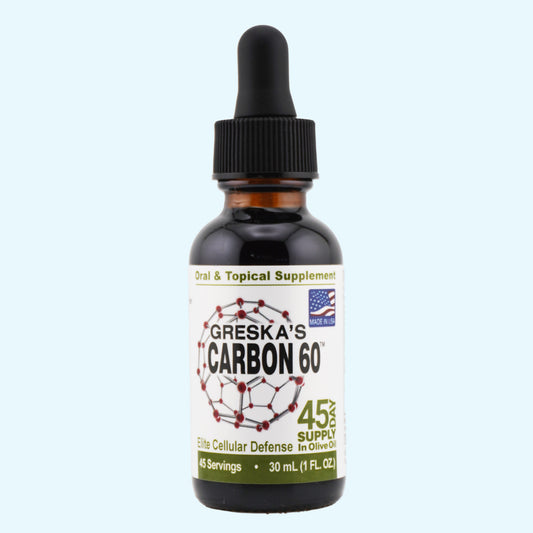
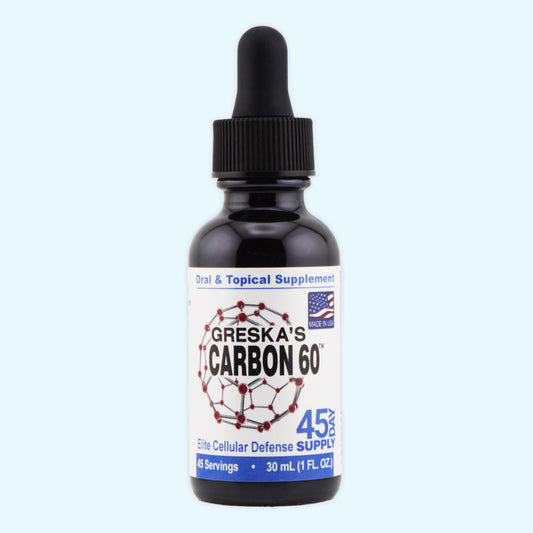
If you are going to take C60, the quality of the C60 is the whole product. Greska's Carbon 60 is made in Colorado with no solvents, additives or fillers, and it is third party tested. Customers take it daily to support:*
- Natural antioxidant defenses
- A balanced immune response
- A normal inflammatory response
- Joint comfort and mobility
- Healthy aging at the cellular level
- Recovery from everyday stress
12
Frequently Asked Questions
Is C60 good for the immune system?
In lab and animal research, C60 has been linked to lower oxidative stress and calmer immune cell signaling. As a supplement, it supports the body's natural antioxidant defenses and a balanced immune response.*
Has C60 been studied for autoimmune conditions?
Yes, in cell and animal models used to study joint, gut and nervous system conditions. No human clinical trials have tested C60 for any autoimmune disease.
Is C60 an antioxidant?
Yes. C60 is one of the most studied antioxidant molecules in research and is known for its ability to take on many free radicals at once.
Is C60 safe?
Studies on pristine C60 in rodents, including Gharbi 2005, reported no acute or subacute toxicity. As with any supplement, check with your doctor first, especially if you have a health condition or take medication.
Can I take C60 with my medication?
Talk with your doctor. This is especially important if you take immune modulating or anti inflammatory medication.
No solvents. No additives. No fillers. Third party tested.
Shop All C60Questions? Call 720 600 6040
References
- Gharbi N, et al. Nano Letters, 2005;5(12):2578. Link
- Ryan JJ, et al. Journal of Immunology, 2007;179(1):665. Link
- Basso AS, et al. Journal of Clinical Investigation, 2008;118(4):1532. Link
- Yudoh K, et al. International Journal of Nanomedicine, 2009;4:217. Link
- Yudoh K, et al. International Journal of Nanomedicine, 2009;4:233. Link
- Fiziolohichnyi Zhurnal, 2013;59(3):102. Link
- Dellinger AL, et al. PLoS One, 2015;10(4):e0126290. Link
- Byelinska IV, et al. Materials Science and Engineering C, 2018;93:505. Link
- Lazcano Silveira R, et al. Journal of Inflammation Research, 2022;15:4185. Link
*These statements have not been evaluated by the Food and Drug Administration. This product is not intended to diagnose, treat, cure, or prevent any disease. The studies referenced are cell and animal research, several using modified forms of C60, and are shared for educational purposes only. They do not represent results from Greska's Carbon 60 products. Consult your healthcare provider before starting any supplement, especially if you are pregnant, nursing, have a medical condition, or take medication.